
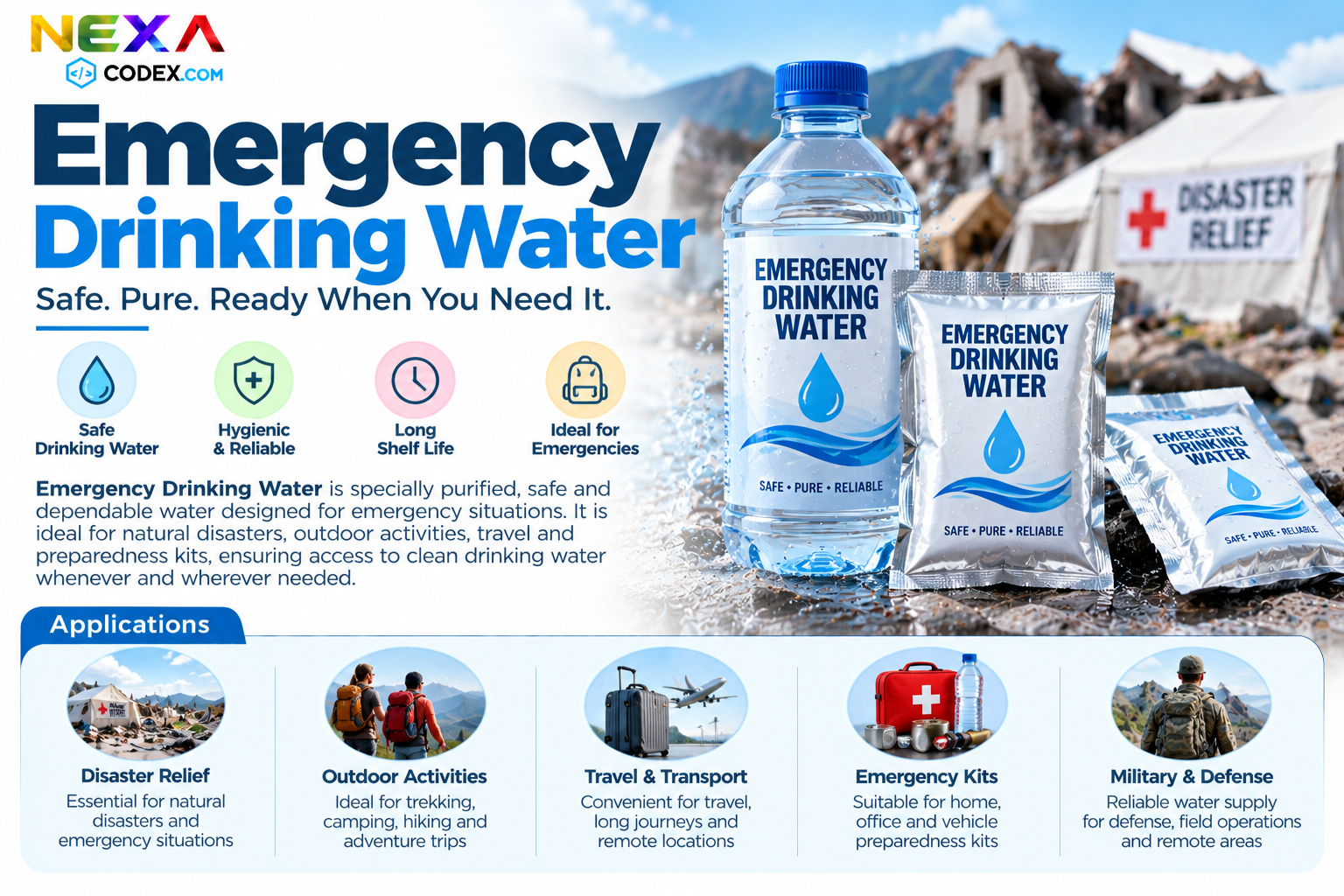
Emergency Drinking Water is drinking water prepared and packaged for situations in which access to a regular, safe water supply may be limited or temporarily unavailable. It can be useful in emergency preparedness kits, disaster-response supplies, evacuation kits, remote work locations, and other situations where a dependable supply of potable water is needed.
Emergency drinking water may be supplied in sealed bottles, pouches, cartons, or specialized long-storage packaging. The packaging format, water source, treatment process, and shelf life vary by manufacturer and product. Buyers should verify that the specific product is intended for drinking, meets the applicable drinking-water requirements, and is supplied with clear storage and expiry information.
Emergency drinking water is intended to provide access to potable water when normal water infrastructure is disrupted or when people are working or travelling in locations with limited access to safe drinking water.
Potential applications include:
The required quantity depends on the number of people, duration of the emergency, environmental conditions, and availability of other safe water sources. Emergency planning should consider water for drinking and other essential needs.
Emergency drinking water may be available in individual bottles, sealed pouches, cartons, or other suitable containers. Packaging should be designed for the intended storage and distribution conditions and should protect the water from contamination.
When evaluating a product, buyers should check the container material, seal integrity, volume per unit, case quantity, storage instructions, and whether the packaging is suitable for the expected transport and storage environment.
The suitability of a product for long-term emergency storage depends on the water treatment process, packaging, manufacturing controls, and validated shelf life. A long shelf life should not be assumed solely because the product is marketed as emergency water.
Water intended for emergency drinking should meet the applicable potable-water quality standards for the market in which it is sold. Quality assurance may include testing for relevant microbiological indicators, chemical contaminants, physical characteristics, and other parameters required by the applicable standard.
The treatment and filling process should be supported by appropriate quality-control procedures. Buyers should request product-specific quality documentation, such as a water-quality report or Certificate of Analysis, where available, and verify the applicable manufacturing and regulatory requirements.
Clear labeling should identify the product as drinking water, the packaged volume, batch or lot information, manufacturing and expiry or best-before details as applicable, and storage instructions.
Store emergency drinking water according to the manufacturer's instructions. In general, keep sealed containers in a clean, cool location away from direct sunlight, chemicals, fuel, and other potential contaminants. Avoid storage conditions that could damage the packaging or compromise the seal.
Inspect the container before use. Do not consume water from a leaking, damaged, swollen, contaminated, or otherwise compromised package. Follow the product's date marking and any specific instructions regarding use after opening.
For emergency planning, rotate stored supplies according to the manufacturer's guidance and replace products that have passed their stated date or show signs of damage.
Emergency water supplies are most useful when included in a broader preparedness plan. Households, businesses, relief organizations, and facilities should consider the number of people who may need water, the expected duration of the disruption, storage capacity, transportation needs, and access to replacement supplies.
Packaged emergency drinking water should be distinguished from water-treatment products, purification tablets, and non-potable technical water. Products intended for industrial or other non-drinking uses must never be represented as potable drinking water.
Before procurement, buyers should confirm the product's source, treatment process, packaged volume, packaging type, water-quality documentation, storage requirements, shelf life, and applicable regulatory compliance.
Any claim about extended storage, sterility, suitability for a particular emergency programme, or a specific shelf life must be supported by the manufacturer's documentation. Requirements may differ between markets and product categories.
Mediocon Inc. provides product information and business-related support for product enquiries. Buyers interested in Emergency Drinking Water should confirm the exact product, packaging format, potable-water compliance documentation, available quantities, storage instructions, and commercial availability directly with the company.
Request the product specification and relevant quality documents before procurement to ensure that the water meets the intended emergency drinking and distribution requirements.Emergency Drinking Water – Product Overview
Emergency Drinking Water is drinking water prepared and packaged for situations in which access to a regular, safe water supply may be limited or temporarily unavailable. It can be useful in emergency preparedness kits, disaster-response supplies, evacuation kits, remote work locations, and other situations where a dependable supply of potable water is needed.
Emergency drinking water may be supplied in sealed bottles, pouches, cartons, or specialized long-storage packaging. The packaging format, water source, treatment process, and shelf life vary by manufacturer and product. Buyers should verify that the specific product is intended for drinking, meets the applicable drinking-water requirements, and is supplied with clear storage and expiry information.
Emergency drinking water is intended to provide access to potable water when normal water infrastructure is disrupted or when people are working or travelling in locations with limited access to safe drinking water.
Potential applications include:
The required quantity depends on the number of people, duration of the emergency, environmental conditions, and availability of other safe water sources. Emergency planning should consider water for drinking and other essential needs.
Emergency drinking water may be available in individual bottles, sealed pouches, cartons, or other suitable containers. Packaging should be designed for the intended storage and distribution conditions and should protect the water from contamination.
When evaluating a product, buyers should check the container material, seal integrity, volume per unit, case quantity, storage instructions, and whether the packaging is suitable for the expected transport and storage environment.
The suitability of a product for long-term emergency storage depends on the water treatment process, packaging, manufacturing controls, and validated shelf life. A long shelf life should not be assumed solely because the product is marketed as emergency water.
Water intended for emergency drinking should meet the applicable potable-water quality standards for the market in which it is sold. Quality assurance may include testing for relevant microbiological indicators, chemical contaminants, physical characteristics, and other parameters required by the applicable standard.
The treatment and filling process should be supported by appropriate quality-control procedures. Buyers should request product-specific quality documentation, such as a water-quality report or Certificate of Analysis, where available, and verify the applicable manufacturing and regulatory requirements.
Clear labeling should identify the product as drinking water, the packaged volume, batch or lot information, manufacturing and expiry or best-before details as applicable, and storage instructions.
Store emergency drinking water according to the manufacturer's instructions. In general, keep sealed containers in a clean, cool location away from direct sunlight, chemicals, fuel, and other potential contaminants. Avoid storage conditions that could damage the packaging or compromise the seal.
Inspect the container before use. Do not consume water from a leaking, damaged, swollen, contaminated, or otherwise compromised package. Follow the product's date marking and any specific instructions regarding use after opening.
For emergency planning, rotate stored supplies according to the manufacturer's guidance and replace products that have passed their stated date or show signs of damage.
Emergency water supplies are most useful when included in a broader preparedness plan. Households, businesses, relief organizations, and facilities should consider the number of people who may need water, the expected duration of the disruption, storage capacity, transportation needs, and access to replacement supplies.
Packaged emergency drinking water should be distinguished from water-treatment products, purification tablets, and non-potable technical water. Products intended for industrial or other non-drinking uses must never be represented as potable drinking water.
Before procurement, buyers should confirm the product's source, treatment process, packaged volume, packaging type, water-quality documentation, storage requirements, shelf life, and applicable regulatory compliance.
Any claim about extended storage, sterility, suitability for a particular emergency programme, or a specific shelf life must be supported by the manufacturer's documentation. Requirements may differ between markets and product categories.
Mediocon Inc. provides product information and business-related support for product enquiries. Buyers interested in Emergency Drinking Water should confirm the exact product, packaging format, potable-water compliance documentation, available quantities, storage instructions, and commercial availability directly with the company.
| Parameter | Specification |
|---|---|
| Appearance | Clear liquid |
| Identification | Packaged drinking water |
Mediocon Inc is a GMP-certified API manufacturer and bulk pharmaceutical ingredient supplier based in Aurangabad, Maharashtra, India. We specialise in supplying Emergency Drinking Water Manufacturer in India | Mediocon Inc. and over 1,000 other Active Pharmaceutical Ingredients, excipients, herbal extracts, and nutraceutical ingredients to pharmaceutical manufacturers worldwide.
Our Emergency Drinking Water Manufacturer in India | Mediocon Inc. is manufactured under strict quality management protocols compliant with WHO-GMP, ISO 9001:2015, and major pharmacopoeial standards (IP, BP, USP, EP). Every batch undergoes full analytical testing before release with a Certificate of Analysis.
Export Markets
Quality & Compliance