
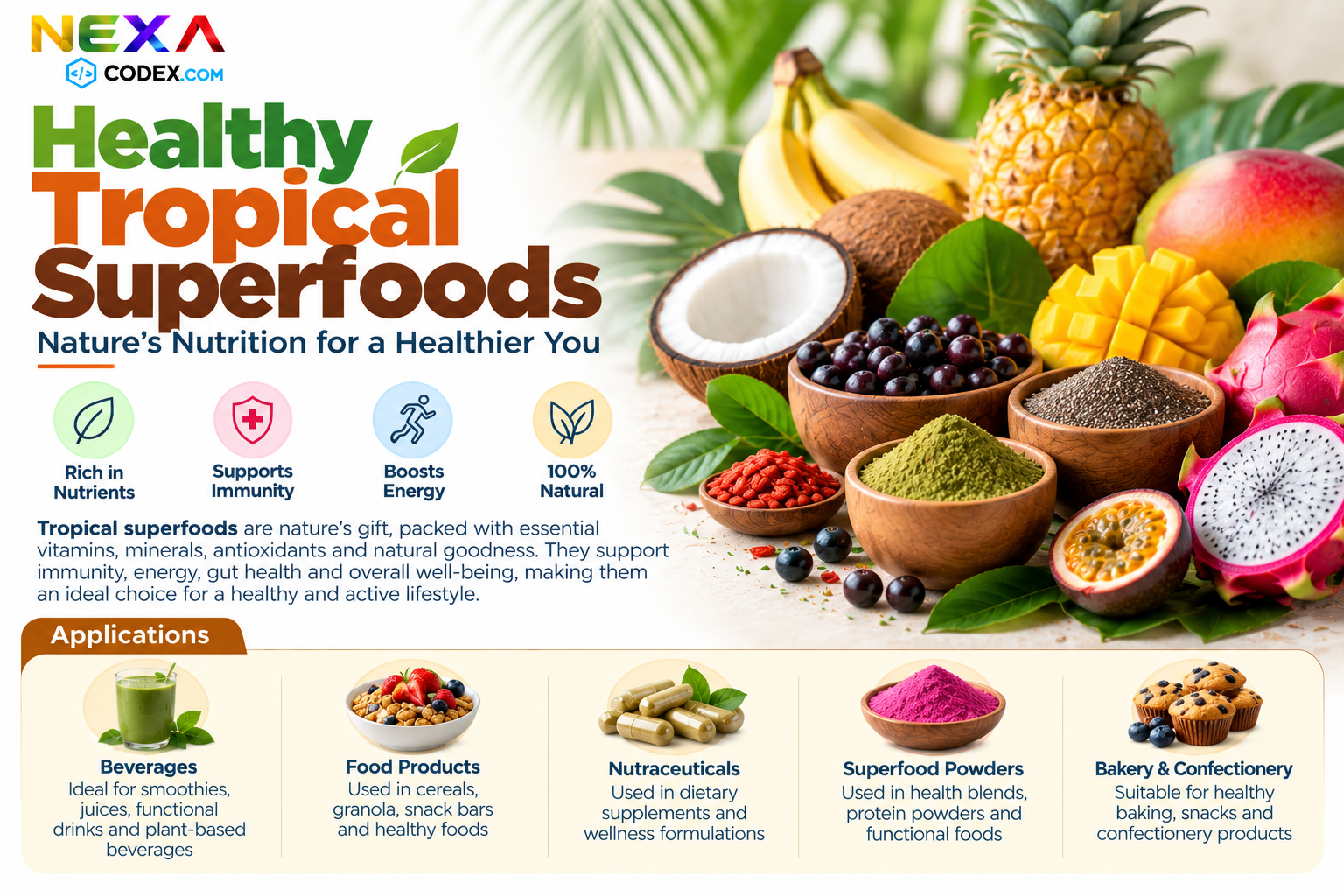
Healthy tropical superfoods are nutrient-rich fruits, seeds, plant-derived ingredients, and other foods sourced from tropical and subtropical regions. They are valued for their diverse nutritional profiles, distinctive flavours, and versatility in food and beverage development. Depending on the ingredient, tropical superfoods may provide dietary fibre, vitamins, minerals, naturally occurring plant compounds, healthy fats, or other nutritional components.
Examples include mango, papaya, pineapple, guava, coconut, banana, passion fruit, dragon fruit, jackfruit, acerola, and selected tropical seeds. Ingredients derived from these foods are available in different forms, such as fresh or dried fruit, powders, purées, juices, oils, and concentrated extracts.
The term "superfood" is a general marketing term rather than a standardized scientific or regulatory category. Nutritional value varies by ingredient, variety, growing conditions, processing method, and serving size. Product selection should therefore be based on verified nutritional information and the intended application.
Tropical fruits and plant-based ingredients can contribute a variety of nutrients to a balanced diet. Guava and acerola are known for their vitamin C content, while mango and papaya can contribute vitamins and other naturally occurring plant compounds. Coconut provides fat, and dried fruits may contain more concentrated sugars and calories per unit weight than their fresh counterparts because water has been removed.
Different tropical ingredients have different nutritional characteristics. Some provide dietary fibre, while others are selected for their flavour, texture, colour, or suitability for food processing. No single ingredient supplies every nutrient, and the nutritional contribution of a finished product depends on its complete formulation and serving size.
Mango is a tropical fruit used in fresh, frozen, dried, puréed, and powdered forms. Mango ingredients can provide characteristic fruit flavour and may contribute fibre and naturally occurring vitamins. They are used in beverages, fruit preparations, snack products, desserts, and other food formulations.
Papaya is used in fresh and processed food applications. Depending on the form, papaya ingredients may be incorporated into fruit blends, dried snacks, beverage products, and food preparations. The nutritional composition varies with ripeness and processing.
Pineapple is valued for its sweet-tart flavour and versatility in juices, concentrates, fruit preparations, dried snacks, and blended beverages. Its composition and processing characteristics depend on the source material and product format.
Guava is a tropical fruit that can contribute dietary fibre and vitamin C. Guava ingredients are used in juices, purées, fruit powders, jams, confectionery, and other food applications. Nutrient levels vary by variety and processing method.
Coconut is used in several ingredient forms, including coconut water, coconut milk, desiccated coconut, coconut flour, and coconut oil. Each form has a different nutritional profile and intended use. Coconut-derived ingredients are used in beverages, bakery products, snacks, desserts, and plant-based formulations.
Banana is widely used in fresh, dried, powdered, and puréed forms. Banana powder and dried banana ingredients may be incorporated into smoothies, bakery products, snack formulations, and food mixes. Their texture, starch content, and sweetness depend on maturity and processing.
Passion fruit is valued for its distinctive aroma and tart flavour, while dragon fruit is used for its appearance, flavour, and versatility in fruit blends and beverages. These ingredients may be available as fresh fruit, purées, juices, or processed powders.
Acerola is a tropical fruit known for its naturally occurring vitamin C. Acerola powders and extracts may be used in selected food and supplement formulations, subject to ingredient specifications and applicable regulations. Vitamin C content should be supported by analytical data for the specific product.
Jackfruit is used in both sweet and savoury food applications. Depending on maturity and processing, it can be used in fruit products, dried snacks, flour, and plant-based food formulations. Its suitability depends on the intended recipe and processing requirements.
Tropical superfood ingredients may be incorporated into a wide range of products, depending on their form, composition, and regulatory status.
Ingredient selection should consider flavour compatibility, moisture content, solubility or dispersibility where relevant, stability, colour, texture, packaging, and shelf-life requirements.
Tropical superfoods can be processed into powders, purées, concentrates, oils, dried pieces, and other formats. Drying methods can affect moisture content, texture, colour, flavour, and nutrient retention. Concentration and extraction processes may also change the composition of the resulting ingredient.
For commercial procurement, buyers should distinguish between whole-fruit powder, juice powder, fruit extract, purée powder, and isolated plant compounds. These are different ingredient types and should not be described as equivalent without supporting documentation.
Quality assessment for tropical superfood ingredients depends on the specific material. Relevant checks may include identity, appearance, moisture content, nutritional composition, microbiological quality, heavy metals, pesticide residues, and other contaminants appropriate to the ingredient and intended market.
For powders and dried fruits, moisture and microbiological parameters can be particularly important. For products carrying vitamin, mineral, or other nutritional claims, the declared levels should be supported by suitable analytical testing. For oils, purées, concentrates, or extracts, additional product-specific tests may be required.
Buyers should request a current Certificate of Analysis (COA), technical data sheet, ingredient statement, allergen information where applicable, storage recommendations, and relevant regulatory documentation. Any certification or quality-standard claim should be verified against current documentation.
Packaging requirements depend on whether the ingredient is fresh, dried, powdered, liquid, or oil-based. Products should be packed in suitable food-grade packaging and stored according to the supplier's specifications. Dried ingredients generally require protection from moisture, while liquid and oil-based products may require additional controls appropriate to their composition.
Keep products protected from contamination and follow the stated storage conditions. Shelf life should be supported by product-specific stability information and should not be assumed to be the same across all tropical superfood ingredients.
Tropical superfoods can contribute to dietary variety, but they should not be presented as cures or treatments for medical conditions. Nutritional claims such as "high in vitamin C," "source of fibre," or "antioxidant-rich" should be used only when supported by the product's verified composition and permitted under the relevant market's regulations.
The term "superfood" does not automatically indicate a particular level of nutrients, clinical benefit, or regulatory approval. Finished-product manufacturers should verify ingredient suitability, labeling requirements, and permitted claims before commercialization.
Mediocon Inc. provides product information and ingredient-related support for business and formulation requirements. Buyers interested in tropical superfood ingredients should confirm the exact fruit or plant source, ingredient form, nutritional specifications, packaging, documentation, and commercial availability directly with the company.
Mediocon Inc is a GMP-certified API manufacturer and bulk pharmaceutical ingredient supplier based in Aurangabad, Maharashtra, India. We specialise in supplying Healthy Tropical Superfoods Manufacturer in India | Mediocon Inc. and over 1,000 other Active Pharmaceutical Ingredients, excipients, herbal extracts, and nutraceutical ingredients to pharmaceutical manufacturers worldwide.
Our Healthy Tropical Superfoods Manufacturer in India | Mediocon Inc. is manufactured under strict quality management protocols compliant with WHO-GMP, ISO 9001:2015, and major pharmacopoeial standards (IP, BP, USP, EP). Every batch undergoes full analytical testing before release with a Certificate of Analysis.
Export Markets
Quality & Compliance