
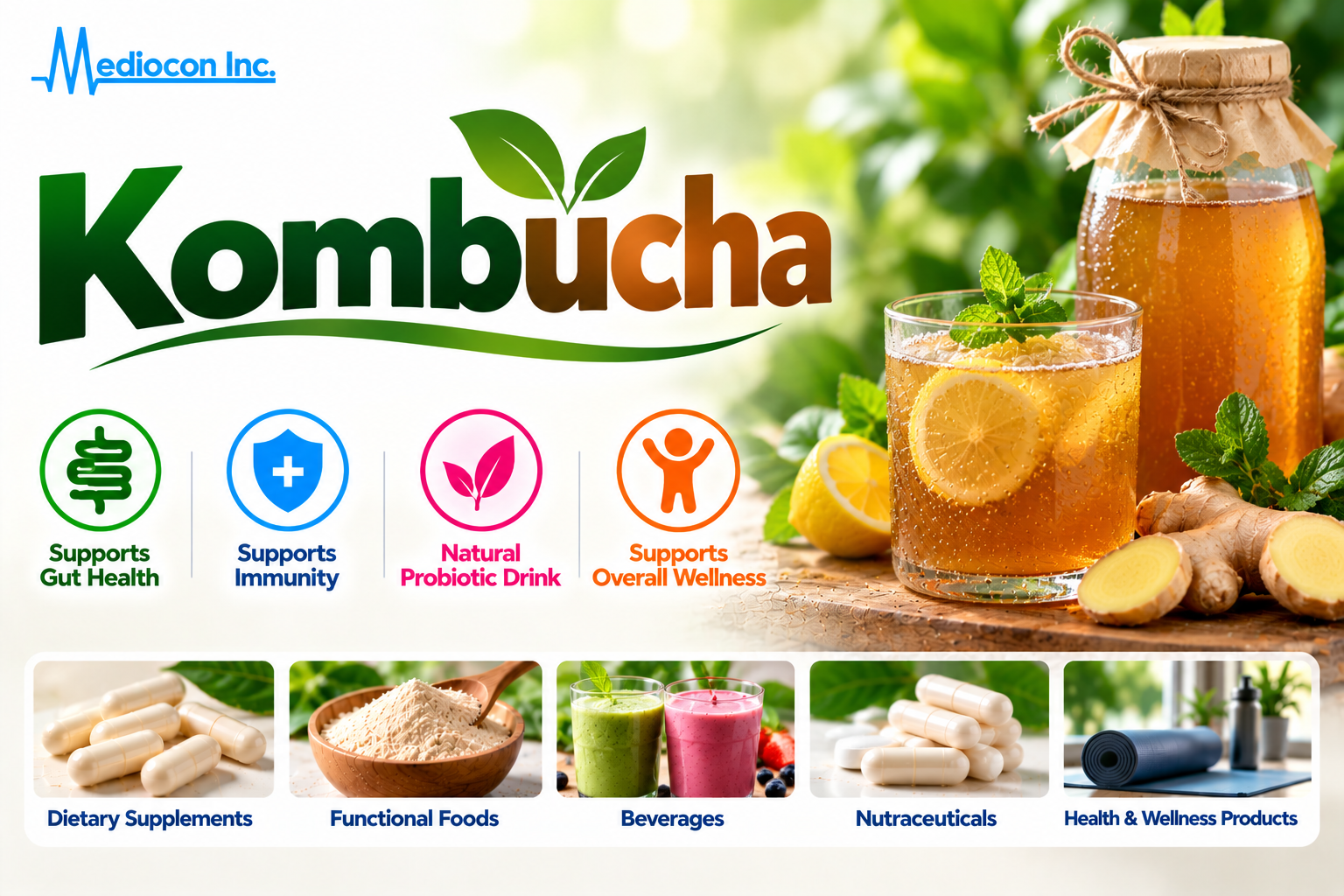
Kombucha is a fermented tea beverage traditionally prepared from tea, sugar, and a symbiotic culture of bacteria and yeast (SCOBY). During fermentation, microorganisms transform some of the available sugars and produce organic acids, carbon dioxide, and other fermentation-derived compounds. The finished product has a characteristic tangy flavor and an acidic profile.
Kombucha is commercially available in several forms, including ready-to-drink beverages, liquid concentrates, and dried fermented tea extracts. The composition, physical properties, microbial profile, and intended applications differ considerably between these forms.
Traditional kombucha is generally produced using black tea, green tea, or another suitable tea base. Sugar provides a substrate for the fermentation process, while the microbial culture drives the conversion of some sugars into organic acids and other metabolites.
Depending on the fermentation conditions and processing method, the resulting product may contain residual sugars, tea-derived polyphenols, organic acids, trace ethanol, and microorganisms. Their concentrations are influenced by the tea variety, sugar level, culture, fermentation time, temperature, and subsequent processing.
A liquid kombucha beverage should not be assumed to have the same composition as spray-dried kombucha powder. Drying, filtration, pasteurization, and the addition of carriers can affect the final product's characteristics.
Kombucha may be used in fermented beverage products, ready-to-drink formulations, beverage concentrates, powdered drink mixes, and other suitable food applications. Dried fermented tea extracts may also be considered for selected food or nutraceutical formulations, subject to their specific composition and regulatory status.
The exact application should be selected according to the ingredient's technical specification, sensory profile, stability, microbiological characteristics, and compatibility with the finished formulation.
Before purchasing or using kombucha as a commercial ingredient, request the current Technical Data Sheet (TDS), Certificate of Analysis (CoA), Safety Data Sheet (SDS), ingredient declaration, fermentation details, residual sugar and acidity data, residual ethanol results, microbiological results, and applicable contaminant testing.
For a liquid product, relevant parameters may include pH, total acidity, soluble solids, residual sugar, and microbial counts. For a powder, relevant parameters may include moisture, particle size, bulk density, carrier content, solubility, and reconstituted-product properties.
Mediocon Inc. can be contacted to enquire about the availability of kombucha or fermented tea ingredients. Buyers should specify whether they require a ready-to-drink beverage, liquid concentrate, or powder, together with their intended application, grade, packaging, quantity, and destination market.
| Parameter | Specification |
|---|---|
| Appearance | Liquid or powder |
Mediocon Inc is a GMP-certified API manufacturer and bulk pharmaceutical ingredient supplier based in Aurangabad, Maharashtra, India. We specialise in supplying Kombucha Manufacturer in India | Mediocon Inc. and over 1,000 other Active Pharmaceutical Ingredients, excipients, herbal extracts, and nutraceutical ingredients to pharmaceutical manufacturers worldwide.
Our Kombucha Manufacturer in India | Mediocon Inc. is manufactured under strict quality management protocols compliant with WHO-GMP, ISO 9001:2015, and major pharmacopoeial standards (IP, BP, USP, EP). Every batch undergoes full analytical testing before release with a Certificate of Analysis.
Export Markets
Quality & Compliance