
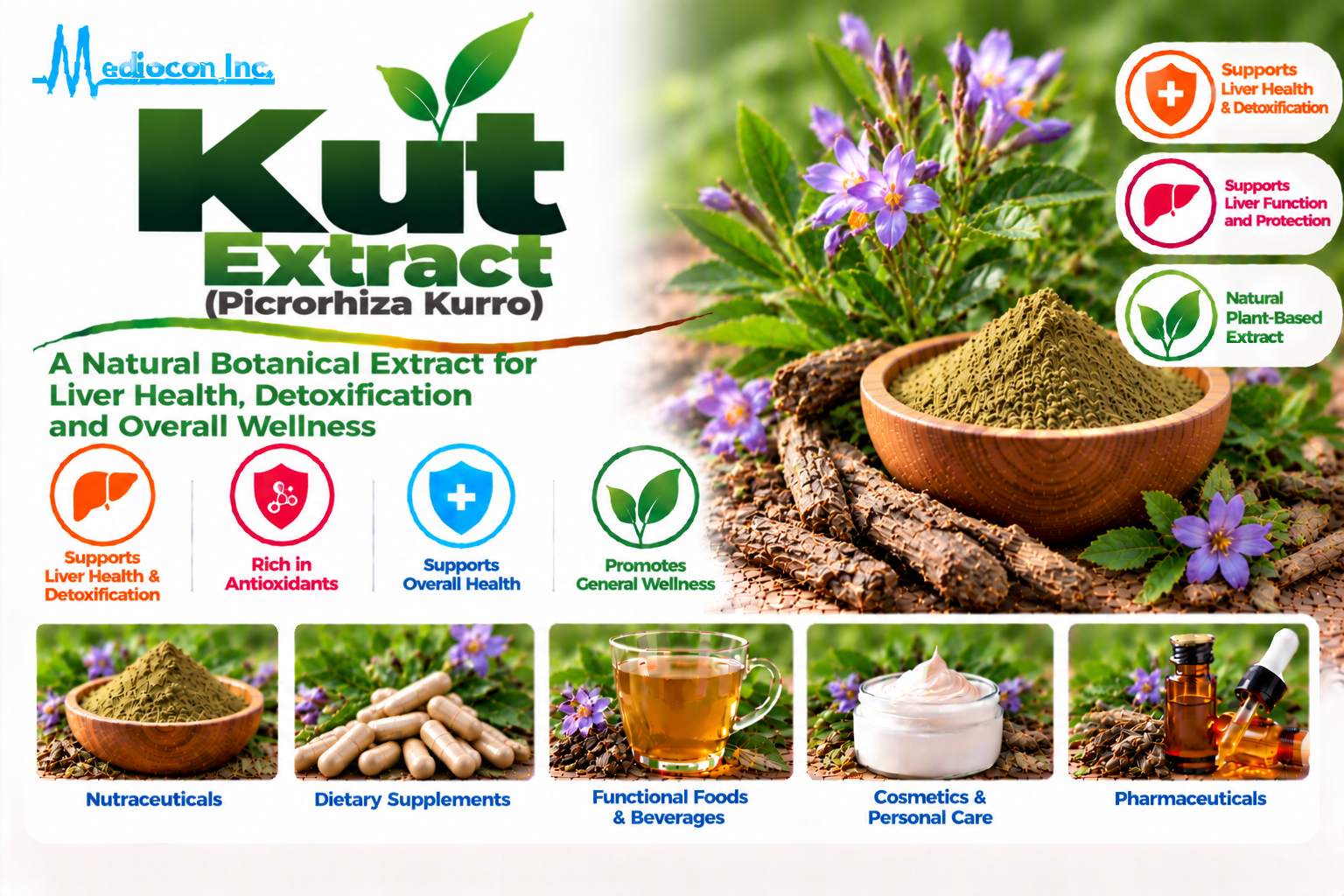
Kutki Extract is a botanical ingredient derived from Picrorhiza kurroa Royle ex Benth., a perennial herb traditionally used in Ayurveda. Commonly known as Kutki, Kutaki, Katuki, Kurro, or Indian gentian, this plant belongs to the Plantaginaceae family and is associated with the high-altitude Himalayan region.
Kutki has received scientific attention because of its naturally occurring iridoid glycosides, particularly picroside-I and picroside-II. These compounds contribute to the plant's characteristic bitter chemistry and are frequently investigated in phytochemical and pharmacological research.
Kutki Extract may be evaluated for botanical formulations, nutraceutical ingredient development, and research applications, depending on its composition, quality grade, and regulatory suitability. The final extract's characteristics depend on the plant material, extraction process, concentration method, and standardization requirements.
For ingredient buyers and product developers, it is important to distinguish a general Kutki Extract from a standardized extract with a defined picroside content. These products may have different chemical profiles and should be evaluated against their individual technical specifications.
The botanical name of Kutki is Picrorhiza kurroa Royle ex Benth. Accurate botanical identification is important for ensuring ingredient authenticity and maintaining consistency throughout the supply chain.
The plant is associated with Himalayan habitats and has been the subject of research into botanical identification, phytochemistry, cultivation, and conservation. The botanical name and plant part should be confirmed in the product's technical documentation before publication.
Kutki Extract is a concentrated botanical preparation obtained by processing specified plant material from Picrorhiza kurroa. The extraction process is designed to recover selected naturally occurring constituents from the plant.
Depending on the manufacturing method, the finished product may be supplied as a powder or another defined extract form. Its composition can vary according to the raw material, extraction solvent, extraction ratio, processing conditions, and any subsequent standardization.
Some Kutki-derived preparations are characterized by their picroside content. However, not every extract has the same picroside concentration, and the presence of a marker compound should not be confused with a guaranteed level unless supported by analytical results.
When evaluating Kutki Extract, buyers should confirm the botanical identity, plant part, extract ratio, solvent system, product form, and assay requirements.
Research into Picrorhiza kurroa has identified several classes of naturally occurring plant constituents. Their distribution and concentration depend on the plant part and extraction method.
Picroside-I is an iridoid glycoside investigated as one of the characteristic compounds of Picrorhiza kurroa. It is relevant to the phytochemical characterization of certain Kutki preparations.
Its concentration should be determined using an appropriate analytical method when a product is intended to meet a defined picroside specification.
Picroside-II is another important iridoid glycoside associated with Kutki research. Together with picroside-I and other constituents, it is frequently discussed in studies examining the chemistry of the plant.
A standardized product should identify the marker compound or compounds and provide supporting assay results in its technical documentation.
Kutki contains other reported glycosides and phytochemicals that have been examined in botanical research. The terminology used for particular constituents and mixtures can vary across scientific publications and product specifications.
For commercial purposes, the exact marker identity and analytical method should be stated clearly rather than relying on a general reference to “Kutkin” or “total actives.”
Studies have reported phenolic compounds, flavonoids, and other secondary metabolites in different parts or extracts of Picrorhiza kurroa. Their presence and concentration depend on the material and analytical method.
These broad chemical categories do not establish the precise composition of a commercial extract. Product-specific testing is required when particular compounds are important to the intended application.
Additional compounds, including terpenoid-related constituents and other plant metabolites, have been investigated in Kutki. Research into these compounds contributes to the broader understanding of the plant's chemistry.
A supplier's technical specification should distinguish experimentally confirmed constituents from compounds reported in the species generally.
Kutki Extract may be considered for several botanical ingredient and research applications, subject to the actual grade and applicable regulations.
Kutki has a history of use in traditional Ayurvedic preparations. Extracts derived from the plant may be evaluated by qualified product developers for appropriate botanical formulations.
The suitability of an ingredient depends on its identity, composition, quality, safety assessment, and permitted use. Traditional use alone does not establish the effectiveness of every concentrated extract.
Selected Kutki extracts may be evaluated during nutraceutical product development when the ingredient and its intended use meet applicable requirements.
Manufacturers should assess the extract's marker profile, purity, contaminants, compatibility with the formulation, and regulatory status in the target market before use.
Kutki is an established subject of research involving iridoid glycosides and other plant constituents. Researchers may examine its chemical profile, extraction efficiency, analytical identification, and batch-to-batch variation.
Such research can support the development of clearer specifications and more reproducible extraction processes.
Kutki Extract may be evaluated as part of botanical identification and quality-control programs. Relevant work may include chromatographic analysis, fingerprinting, marker-compound quantification, and comparison of batches.
These procedures can help establish whether an extract meets a defined product specification.
Product developers may investigate Kutki-derived ingredients for compatibility with selected formulation systems. Important considerations include the extract's physical form, solubility, stability, and chemical profile.
Small-scale testing and technical review are recommended before commercial production.
Important: These are potential ingredient and research applications, not claims that Kutki Extract prevents, treats, or cures a disease.
The composition of Kutki Extract is influenced by the processing method used to prepare it.
The starting material should be correctly identified as Picrorhiza kurroa. The plant part, origin, condition, and traceability should be documented.
Because Kutki is associated with conservation concerns, responsible sourcing and compliance with applicable collection and trade requirements are important considerations.
Raw botanical material may undergo cleaning and preparation before extraction. Processing requirements depend on the material and manufacturing procedure.
The identity and suitability of the material should be verified before it enters the extraction process.
The prepared material is processed using a suitable extraction system. Solvent selection, temperature, duration, and other processing conditions influence the compounds recovered.
Different extraction methods may produce extracts with different picroside concentrations and physical characteristics.
The extracted material may be concentrated and, where required, dried to produce a powder. The process should be controlled to achieve the characteristics specified for the intended product.
The use of carriers, if applicable, should be documented because it can affect the composition of the finished powder.
Where the product is standardized, the specified marker compound or compounds should be measured using a suitable validated analytical method.
The final batch should be assessed against its approved specification before release. Assay values and acceptance limits should be based on actual test results rather than generic botanical information.
Quality control is important for ensuring the identity, purity, and consistency of Kutki Extract.
A product-specific technical data sheet and Certificate of Analysis (CoA) should be reviewed before the material is approved for use.
Depending on the grade and intended application, relevant quality parameters may include:
Not all tests are applicable to every product. The final testing plan should reflect the extraction process, intended use, and relevant regulatory requirements.
Standardization is an important consideration when a botanical ingredient is required to contain a specified level of one or more marker compounds.
For Kutki Extract, picroside-I and picroside-II are commonly discussed in the scientific literature as relevant phytochemical markers. A commercial specification may include one or both compounds, depending on the product grade.
A complete standardization specification should identify the marker, analytical method, reporting basis, and acceptable range. It should also explain whether the result refers to the extract as supplied or to a dry-weight basis.
The extraction ratio should be documented separately from the marker assay. An extract ratio does not independently demonstrate a specific picroside concentration or biological effect.
Several factors can influence the quality and consistency of Kutki Extract.
The correct identification of Picrorhiza kurroa is essential. Botanical authentication helps reduce the risk of substitution or the use of an incorrect plant species.
Roots and rhizomes are commonly associated with Kutki preparations, but the actual plant part must be confirmed for each product. Different plant parts may have different chemical profiles.
The solvent and processing conditions influence which compounds are recovered. Two extracts with the same botanical name may therefore differ substantially in composition.
Where a standardized extract is required, marker content should be measured and compared with the approved specification. A product name alone cannot establish the assay.
Testing requirements may include heavy metals, microbial contamination, pesticide residues, and residual solvents, as appropriate to the product and intended use.
Packaging and storage conditions should protect the extract's specified characteristics. Shelf life should be based on appropriate product data rather than assumed from the general properties of the plant.
Kutki has a long history in traditional medicine, and modern research has examined its constituents and possible biological activities. However, evidence relating to a particular extract or experimental preparation should not automatically be applied to all commercial Kutki products.
Safety depends on the specific extract, its concentration, quality, intended exposure, and the user or target population. Botanical ingredients can also interact with medicines or be unsuitable for certain individuals.
Kutki Extract should not be presented as a substitute for medical treatment. Health-related claims should be supported by appropriate evidence and comply with applicable regulations. For human-use products, the responsible manufacturer should conduct the necessary safety and regulatory assessment.
Picrorhiza kurroa is a Himalayan medicinal plant that has been identified in scientific reviews as facing conservation pressures associated with habitat disturbance and overharvesting.
Responsible sourcing is therefore an important consideration for buyers and manufacturers. Appropriate sourcing practices may include checking the origin of raw materials, traceability records, supplier documentation, and compliance with applicable collection and trade requirements.
Cultivation, conservation, and sustainable production practices can contribute to the long-term availability of botanical raw materials. Commercial buyers should verify that their sourcing arrangements meet relevant legal and sustainability requirements.
Before purchasing Kutki Extract, buyers should evaluate the following factors:
Kutki Extract is a botanical preparation obtained from Picrorhiza kurroa, a Himalayan herb traditionally used in Ayurveda. Its composition depends on the plant part and extraction process.
The botanical name is Picrorhiza kurroa Royle ex Benth.
Roots and rhizomes are commonly used in Kutki preparations. The plant part for a particular commercial product should be confirmed in its technical documentation.
Picroside-I and picroside-II are important iridoid glycosides associated with Kutki research. Other phytochemicals have also been reported in the plant.
Picroside standardization means measuring a specified picroside marker and confirming that its content meets the defined product specification.
No. Some extracts are standardized to specified marker compounds, while others may be sold with different specifications. Standardization must be verified from the product documentation.
Quality assessment may include botanical identification, marker-compound assay, moisture, contaminant testing, microbiological testing, and other parameters relevant to the product grade.
Buyers should confirm botanical identity, plant part, extraction ratio, marker assay, product form, quality documentation, intended-use suitability, and sourcing traceability.
Follow the storage conditions and shelf-life information supplied in the approved product specification.
Kutki is a traditional medicinal plant, but a commercial botanical extract is not automatically an approved medicine. Its permitted use and any claims depend on the product, evidence, and applicable regulations.
Kutki Extract (Picrorhiza kurroa) is a botanical ingredient of interest in traditional herbal practices, phytochemical research, and botanical product development. Its chemical profile includes iridoid glycosides such as picroside-I and picroside-II, which are frequently studied as characteristic constituents of the plant.
The quality and suitability of a commercial extract depend on botanical authenticity, plant part, extraction process, standardization, contaminant testing, and traceability. Reviewing the product-specific technical data sheet and Certificate of Analysis helps buyers establish whether an ingredient meets their requirements.
Mediocon Inc. product information should accurately reflect the available grade, verified specifications, and actual business role. Clear documentation and responsible sourcing practices are important for maintaining confidence in botanical ingredients.
| Parameter | Specification |
|---|---|
| Identification | Botanical identity |
Mediocon Inc is a GMP-certified API manufacturer and bulk pharmaceutical ingredient supplier based in Aurangabad, Maharashtra, India. We specialise in supplying Kutki Extract (Picrorhiza kurroa) Manufacturer in India | Mediocon INC. and over 1,000 other Active Pharmaceutical Ingredients, excipients, herbal extracts, and nutraceutical ingredients to pharmaceutical manufacturers worldwide.
Our Kutki Extract (Picrorhiza kurroa) Manufacturer in India | Mediocon INC. is manufactured under strict quality management protocols compliant with WHO-GMP, ISO 9001:2015, and major pharmacopoeial standards (IP, BP, USP, EP). Every batch undergoes full analytical testing before release with a Certificate of Analysis.
Export Markets
Quality & Compliance