
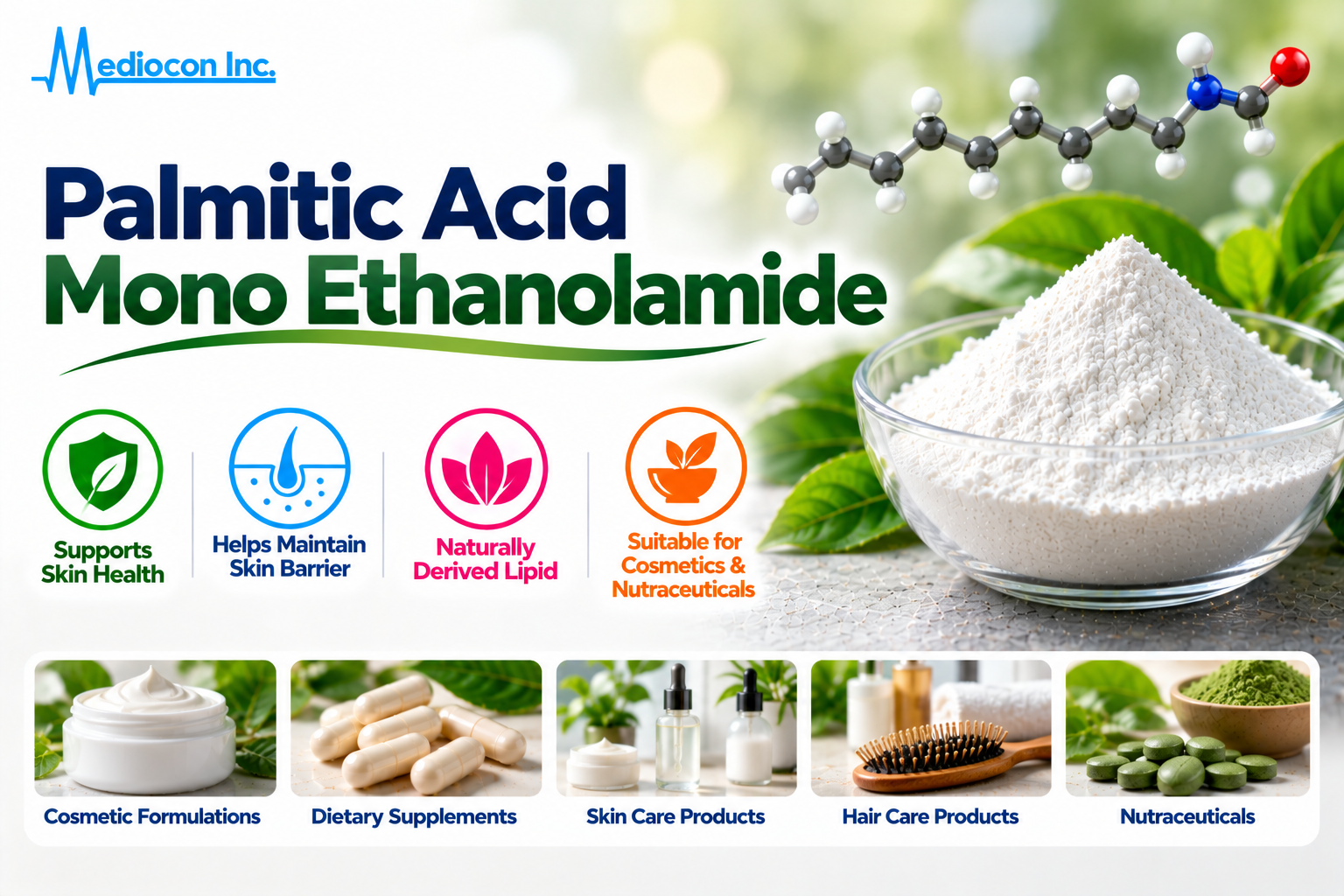
Palmitic Acid Mono Ethanolamide, commonly known as Palmitoylethanolamide (PEA), is a fatty-acid ethanolamide belonging to the N-acylethanolamine family. It is also identified by chemical names such as N-palmitoylethanolamine, palmitoyl ethanolamide, and N-(2-hydroxyethyl)hexadecanamide. Its CAS Registry Number is 544-31-0, molecular formula is C18H37NO2, and molecular weight is approximately 299.49 g/mol.
Palmitoylethanolamide is a naturally occurring lipid compound found in biological systems. It has been studied in biochemical, nutritional, and biomedical research because of its interactions with lipid-signalling pathways. Its research applications and commercial uses depend on the grade, purity, intended application, and regulatory status of the specific material.
Palmitoylethanolamide is the ethanolamide derivative of palmitic acid. Its structure consists of a long-chain fatty-acid portion connected to an ethanolamide group. The compound is distinct from palmitic acid itself and from other fatty-acid ethanolamides with different chain lengths or chemical structures.
For reliable product identification, buyers and formulators should check the chemical name, CAS number, molecular formula, molecular weight, purity specification, and analytical identification methods. These details should be consistent across the product label, specification sheet, and Certificate of Analysis.
Commercial reference products describe Palmitoylethanolamide as a solid material, commonly supplied as a white or almost-white powder or crystalline solid. The precise appearance, particle size, purity, melting range, and other physical properties can vary with grade and manufacturing process.
A product specification should define the applicable identity tests, assay method, purity requirements, impurity limits, moisture or loss on drying, residual solvents where relevant, and packaging conditions. Numerical acceptance limits should be based on the actual supplier specification rather than assumed from another manufacturer's product.
Palmitoylethanolamide has been investigated for its biological activity and interactions with lipid-signalling pathways. Scientific literature includes research into its role in inflammatory signalling and related physiological processes. Such research interest does not establish that every commercial grade is suitable for human consumption or that a particular finished product will deliver a specific clinical outcome.
Depending on the grade and applicable regulations, PEA may be considered for research, analytical, nutritional, or formulation-related applications. Before using it in a finished dietary supplement, pharmaceutical preparation, or other regulated product, the formulator must confirm the material's intended-use status, quality documentation, applicable regulations, and suitability for the proposed application.
Reliable sourcing requires appropriate documentation for the exact material being purchased. Relevant documents may include a current Technical Data Sheet, Safety Data Sheet, batch-specific Certificate of Analysis, identity and assay results, impurity profile, and applicable manufacturing or quality-system documentation.
The Certificate of Analysis should identify the batch and report actual test results against the applicable specification. General statements about high purity, pharmaceutical grade, food grade, or GMP compliance should not be accepted without supporting documentation relevant to the supplier and product.
Packaging should protect the material from contamination, moisture, light, and other conditions identified in the approved specification. Storage requirements depend on the grade, packaging, stability data, and supplier instructions. Some analytical reference products recommend protection from light and low-temperature storage; those conditions should not automatically be applied to every commercial grade.
Users should consult the product-specific Safety Data Sheet and follow appropriate laboratory or industrial handling procedures. Requirements for food or supplement manufacturing should be confirmed separately from those for laboratory research material.
Mediocon Inc. can provide product information and respond to commercial enquiries according to its verified sourcing and supply arrangements. Buyers should specify the required grade, target assay, intended application, quantity, packaging, destination market, and documentation requirements.
Before placing an order, confirm availability, commercial terms, delivery conditions, batch documentation, regulatory suitability, and any restrictions related to the intended application. Product specifications and supply claims should always reflect the actual material being offered.
Palmitic Acid Mono Ethanolamide, or Palmitoylethanolamide (PEA), is a defined fatty-acid ethanolamide with the CAS number 544-31-0 and molecular formula C18H37NO2. Accurate product identification, batch-specific quality documentation, suitable storage, and confirmation of intended-use requirements are essential when evaluating this ingredient for research or formulation applications.
Mediocon Inc is a GMP-certified API manufacturer and bulk pharmaceutical ingredient supplier based in Aurangabad, Maharashtra, India. We specialise in supplying Palmitic Acid Mono Ethanolamide | Manufacturer | Mediocon Inc. (CAS 544-31-0) and over 1,000 other Active Pharmaceutical Ingredients, excipients, herbal extracts, and nutraceutical ingredients to pharmaceutical manufacturers worldwide.
Our Palmitic Acid Mono Ethanolamide | Manufacturer | Mediocon Inc. is manufactured under strict quality management protocols compliant with WHO-GMP, ISO 9001:2015, and major pharmacopoeial standards (IP, BP, USP, EP). Every batch undergoes full analytical testing before release with a Certificate of Analysis.
Export Markets
Quality & Compliance