
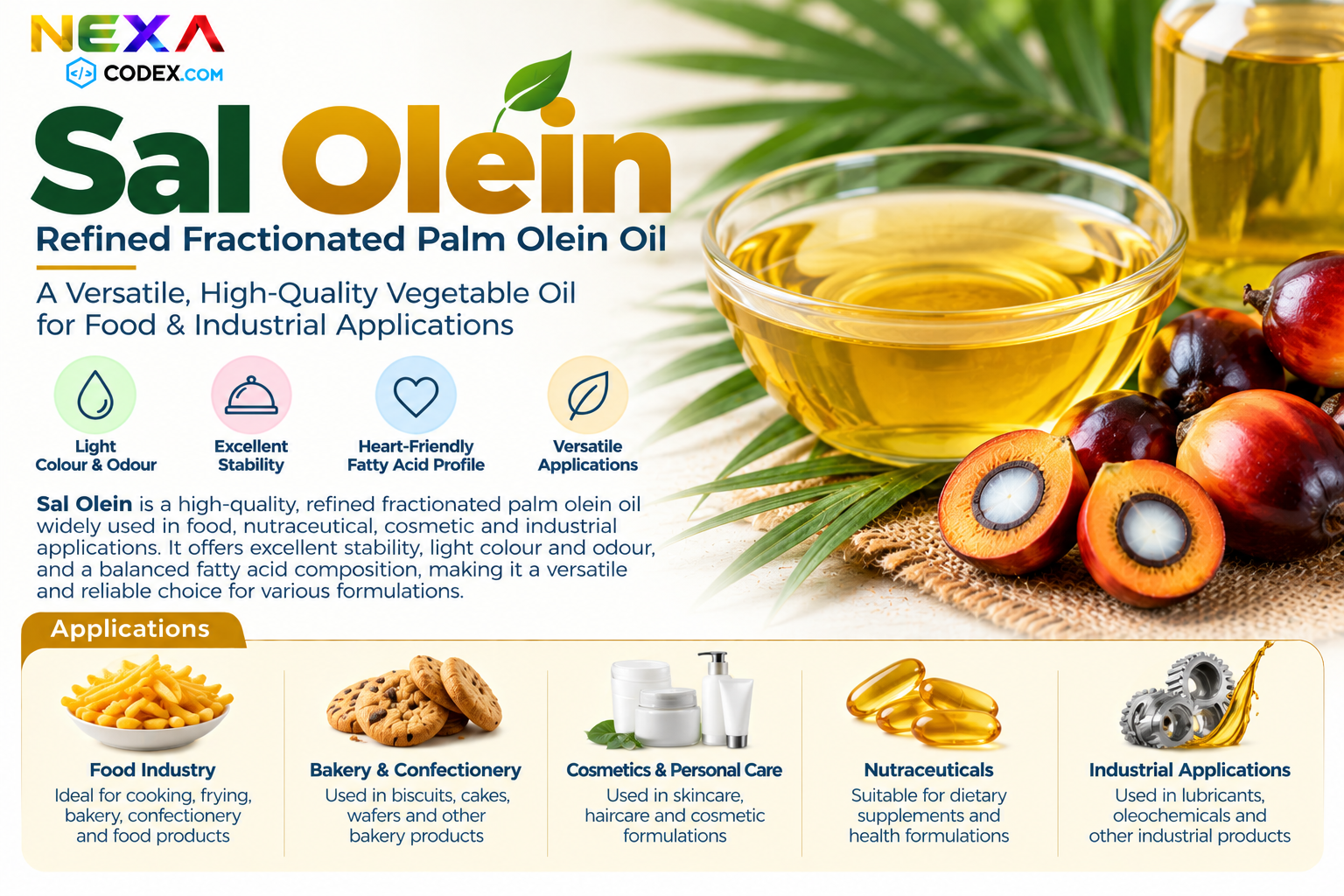
Sal Olein is an oil fraction derived from sal fat, a vegetable fat obtained from the seeds of the sal tree (Shorea robusta). Sal fat is processed and fractionated to separate components with different melting and crystallization characteristics. The resulting olein fraction has functional properties that can make it suitable for selected applications in fats, oils, and specialty ingredient formulations.
The exact properties of Sal Olein depend on the source material, refining process, fractionation method, and product specifications. It should be distinguished from whole sal fat and other fractions, as these materials may have different melting behaviour, consistency, and performance in finished products.
For commercial procurement, buyers should confirm the ingredient's identity, grade, intended application, quality parameters, packaging, and regulatory suitability with the supplier.
Sal fat is a vegetable fat obtained from the seeds of Shorea robusta, a tree native to parts of South Asia. Like other vegetable fats, it contains a mixture of triglycerides composed of fatty acids. Fractionation separates portions of the original fat according to differences in their crystallization and melting characteristics.
Sal Olein is the liquid or lower-melting fraction produced through an appropriate fractionation process. Its fatty acid composition and physical characteristics depend on the source material and processing conditions. Exact composition, iodine value, melting characteristics, and other parameters should be taken from the current product specification and Certificate of Analysis (COA).
Sal Olein is produced by processing sal fat into a fraction with properties that differ from the original fat. Its suitability for a formulation depends on its consistency, melting profile, and compatibility with other fats or oils.
Fractionated fats are selected partly for their physical behaviour at different temperatures. The melting range and crystallization characteristics of Sal Olein should be confirmed through product-specific testing, particularly when the material is intended for a process requiring controlled texture or consistency.
Sal Olein may be evaluated as a component in selected fat-based formulations. Its performance depends on the proportions of other ingredients, processing temperatures, cooling conditions, and the desired characteristics of the finished product. Pilot trials may be needed before large-scale use.
Depending on the grade, specifications, and permitted use, Sal Olein may be evaluated for selected applications involving vegetable fats and oils, including:
Suitability for food, cosmetic, pharmaceutical, or other applications must not be assumed from the ingredient name alone. Buyers should confirm the intended grade, processing history, quality documentation, and regulatory requirements for the target market.
Quality assessment is important when sourcing Sal Olein for commercial use. Depending on the intended application, relevant parameters may include:
Not every parameter applies to every grade. Analytical methods and acceptance criteria should be appropriate to the intended use. Buyers should request a current COA and technical data sheet before confirming an order.
Numeric specifications should only be published when verified for the exact Sal Olein product. Values may vary according to the source material and fractionation process.
Sal Olein should be stored in suitable packaging and under conditions recommended by the supplier. Temperature management may be important because vegetable fat fractions can change in consistency or crystallization behaviour as temperatures fluctuate.
Protect the material from contamination, excessive heat, unsuitable storage conditions, and prolonged exposure to air or light where relevant. Follow the supplier's instructions for handling, transport, storage, and shelf life. Food-grade handling and packaging requirements should be followed only when the material is verified and supplied for food use.
Before procurement, buyers should request the product specification sheet, current COA, ingredient source details, intended grade, packaging information, storage recommendations, and applicable regulatory documentation.
The regulatory requirements for Sal Olein depend on its intended application and destination market. Food-use, cosmetic-use, and industrial-use requirements can differ. Manufacturers should verify ingredient suitability and labeling requirements before incorporating the material into a finished product.
Mediocon Inc. provides product information and ingredient-related support for business and formulation requirements. Buyers interested in Sal Olein should confirm the exact grade, source, physical properties, quality specifications, documentation, packaging, and commercial availability directly with the company.
Mediocon Inc is a GMP-certified API manufacturer and bulk pharmaceutical ingredient supplier based in Aurangabad, Maharashtra, India. We specialise in supplying Sal Olein Manufacturer in India | Mediocon Inc. and over 1,000 other Active Pharmaceutical Ingredients, excipients, herbal extracts, and nutraceutical ingredients to pharmaceutical manufacturers worldwide.
Our Sal Olein Manufacturer in India | Mediocon Inc. is manufactured under strict quality management protocols compliant with WHO-GMP, ISO 9001:2015, and major pharmacopoeial standards (IP, BP, USP, EP). Every batch undergoes full analytical testing before release with a Certificate of Analysis.
Export Markets
Quality & Compliance