
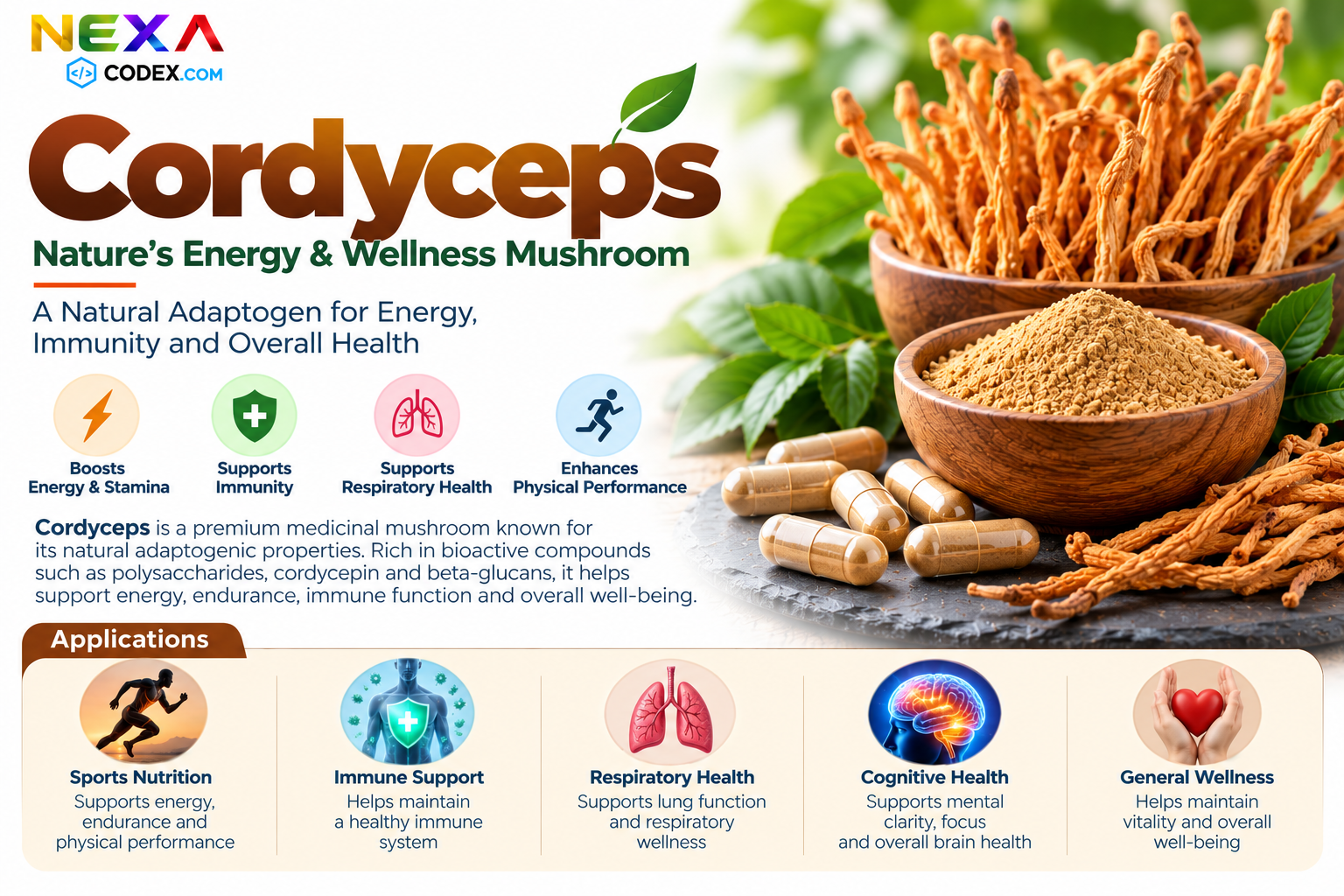
Cordyceps is a genus of fungi used in specialty ingredient research and the development of selected nutraceutical and functional ingredient formulations. Different Cordyceps species have distinct characteristics, compositions, and applications. Among the species of commercial interest is Cordyceps militaris, which is cultivated under controlled conditions and used to produce fungal powders and extracts.
Cordyceps ingredients may be supplied as dried fungal material, fruiting body powder, mycelial material, fermented powder, or concentrated extracts. The properties of each ingredient depend on its species, source material, cultivation method, extraction process, and manufacturing controls. Identifying the exact ingredient form is therefore important when selecting Cordyceps for a commercial or research application.
Cordyceps materials may contain naturally occurring nucleosides, polysaccharides, amino acids, and other fungal constituents. Cordycepin is a notable compound associated with Cordyceps militaris. Adenosine and other nucleosides may also be examined during analytical characterization.
The quantity of these constituents is not the same in every Cordyceps product. Species, strain, growing substrate, cultivation conditions, drying, and extraction methods can influence the final composition. Any claim regarding cordycepin percentage, adenosine content, polysaccharide concentration, or extract strength should be supported by product-specific analytical results.
Cordyceps ingredients may be encountered in several forms:
These forms are not interchangeable. Buyers should confirm the species, material used, processing method, extraction solvent where applicable, and standardization details before selecting an ingredient.
Depending on the identity, quality, intended use, and regulatory acceptability of the specific ingredient, Cordyceps may be evaluated for:
The final application should be determined by the finished-product manufacturer's technical requirements and the regulations of the target market. The ingredient's presence in a formulation does not by itself establish a health benefit or authorize a medical claim.
Quality control helps confirm the identity, consistency, and suitability of Cordyceps ingredients. Depending on the material and intended application, a quality evaluation may include:
Analytical methods should be appropriate for the ingredient and the claims being made. For example, a standardized extract should have a defined marker compound and a validated or otherwise suitable analytical method. A specification should not assign a marker percentage to a product unless that value has been confirmed for the exact material.
Commercial buyers should review the product specification sheet and current Certificate of Analysis (COA) before confirming an order. Depending on the product, useful documentation may include species identification, ingredient form, manufacturing or cultivation details, extraction information, analytical results, microbiological limits, contaminant testing, packaging details, and recommended storage conditions.
Specifications such as extraction ratio, cordycepin content, adenosine content, polysaccharide percentage, particle size, shelf life, and bulk density should be included only when supported by the supplier's documentation. Values may vary among products and production batches.
Cordyceps ingredients should be stored according to the product-specific technical data sheet. In general, the material should be protected from excessive moisture, heat, direct sunlight, and contamination. Keep the packaging closed when not in use and follow the supplier's instructions for handling, transport, and storage.
Commercial manufacturers should maintain appropriate batch identification, traceability, hygiene, and quality-control procedures. The shelf life and storage conditions of a finished formulation should be established using suitable supporting data rather than assumed from the raw ingredient alone.
Regulatory requirements for Cordyceps may vary according to the species, source material, processing method, ingredient category, intended use, and destination country. Buyers should confirm whether the specific material is permitted for the intended application before commercialization.
Descriptions and product labels should accurately represent the ingredient's identity and composition. Disease-treatment, disease-prevention, or other therapeutic claims should not be made without appropriate evidence and authorization. Finished-product claims, warnings, and directions must comply with applicable local regulations.
Mediocon Inc. provides product information and ingredient-related support for business and formulation requirements. Buyers interested in Cordyceps should confirm the available species, ingredient form, specifications, documentation, packaging, and commercial availability directly with the company.
| Parameter | Specification |
|---|---|
| Appearance | Product-specific |
Mediocon Inc is a GMP-certified API manufacturer and bulk pharmaceutical ingredient supplier based in Aurangabad, Maharashtra, India. We specialise in supplying Cordyceps Manufacturer in India | Mediocon Inc. and over 1,000 other Active Pharmaceutical Ingredients, excipients, herbal extracts, and nutraceutical ingredients to pharmaceutical manufacturers worldwide.
Our Cordyceps Manufacturer in India | Mediocon Inc. is manufactured under strict quality management protocols compliant with WHO-GMP, ISO 9001:2015, and major pharmacopoeial standards (IP, BP, USP, EP). Every batch undergoes full analytical testing before release with a Certificate of Analysis.
Export Markets
Quality & Compliance