
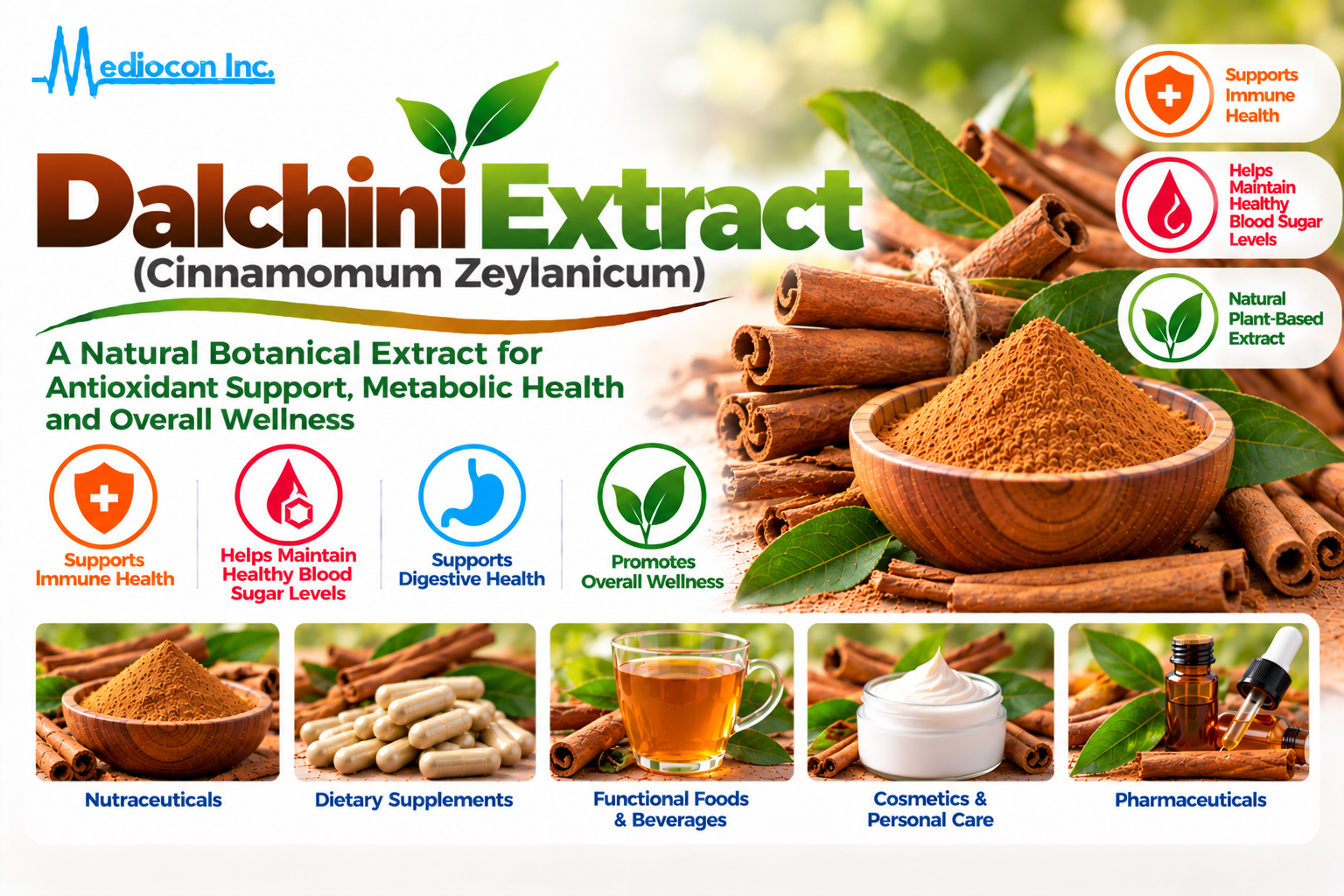
Dalchini, commonly known as cinnamon, is an aromatic botanical obtained from trees belonging to the genus Cinnamomum in the Lauraceae family. The name Cinnamomum zeylanicum is commonly associated with Ceylon cinnamon and is also referred to as Cinnamomum verum.
Cinnamon is widely used as a culinary spice because of its distinctive aroma and flavour. Extracts prepared from its bark or other plant parts may contain different proportions of volatile compounds and other naturally occurring constituents.
The composition of a commercial Dalchini Extract depends on the botanical species, plant part, extraction solvent, processing conditions, and concentration method. Buyers should verify whether the product is derived from bark, leaves, or another specified plant part before selecting it for a particular application.
Important distinction: Bark-derived cinnamon extracts and leaf-derived extracts can have different chemical profiles. Cinnamaldehyde is commonly associated with cinnamon bark oil, while eugenol can be prominent in cinnamon leaf oil. These constituents should not be assumed to occur at a particular concentration in every Dalchini Extract.
Cinnamaldehyde is an aromatic compound associated with the characteristic fragrance and flavour of cinnamon, particularly bark-derived materials. Its concentration varies with the botanical source and processing method.
Eugenol is an aromatic compound that may occur in cinnamon-derived materials, particularly certain leaf oils. Its presence and concentration depend on the plant part and extraction process.
Some cinnamon materials contain naturally occurring polyphenolic compounds. Their concentrations depend on the species, plant part, solvent, and extraction conditions.
Cinnamon-derived ingredients may contain additional volatile compounds that contribute to their characteristic aroma. The chemical profile differs between essential oils, solvent extracts, and other cinnamon preparations.
The actual composition of a commercial extract should be established through product-specific analytical testing. Claims about cinnamaldehyde, eugenol, or other markers should be supported by the product specification and Certificate of Analysis (CoA).
Cinnamon is widely used as a culinary spice. Certain cinnamon-derived ingredients may be evaluated for food or flavour-related applications where the product grade and applicable regulations permit their use.
A botanical extract should not automatically be treated as a food flavouring or additive without verifying its regulatory status and intended-use suitability.
Dalchini Extract is relevant to research involving aromatic plant compounds, botanical extraction, chemical characterization, and the comparison of cinnamon materials derived from different plant parts.
Ingredient developers may evaluate cinnamon extracts for selected formulation projects. Suitability depends on the chemical profile, aroma, colour, solubility, stability, and intended application.
Cinnamon-derived ingredients may be assessed for botanical identity, marker-compound content, volatile composition, and other quality parameters. Suitable chromatographic methods can be used to evaluate specified constituents when required.
These potential applications do not establish clinical effectiveness or guarantee suitability for every product. Any functional or health-related claim should be supported by appropriate evidence and regulatory review.
Quality control is important when sourcing Dalchini Extract. Depending on the grade, specifications may include:
HPLC, GC, GC-MS, or other suitable analytical methods may be used depending on the compound being measured and the nature of the extract.
A current batch-specific CoA should be reviewed before publishing numerical assay values or claims about standardization.
Store Dalchini Extract according to the instructions for the exact product. Use suitable packaging and protect the material from excessive heat, moisture, light, or other conditions identified in its technical documentation.
Follow the applicable safety data sheet and handling procedures for the specific grade.
Before selecting a Dalchini Extract, buyers should confirm the botanical species, plant part, extraction method, product form, intended application, and relevant chemical specifications.
Bark extracts, leaf extracts, and essential oils can differ substantially in composition. A product's name alone is not sufficient to establish its chemical profile or suitability for a particular formulation.
Dalchini Extract (Cinnamomum zeylanicum) is a cinnamon-derived botanical ingredient valued for its characteristic aromatic compounds and potential applications in food-related ingredient development and botanical research.
Its composition and suitability depend on the botanical source, plant part, extraction process, analytical testing, and intended use. Reviewing the product specification and batch-specific CoA is an important step toward informed ingredient selection.
Mediocon Inc is a GMP-certified API manufacturer and bulk pharmaceutical ingredient supplier based in Aurangabad, Maharashtra, India. We specialise in supplying Dalchini Extract (Cinnamomum zeylanicum) Manufacturer in India | Mediocon Inc. and over 1,000 other Active Pharmaceutical Ingredients, excipients, herbal extracts, and nutraceutical ingredients to pharmaceutical manufacturers worldwide.
Our Dalchini Extract (Cinnamomum zeylanicum) Manufacturer in India | Mediocon Inc. is manufactured under strict quality management protocols compliant with WHO-GMP, ISO 9001:2015, and major pharmacopoeial standards (IP, BP, USP, EP). Every batch undergoes full analytical testing before release with a Certificate of Analysis.
Export Markets
Quality & Compliance