
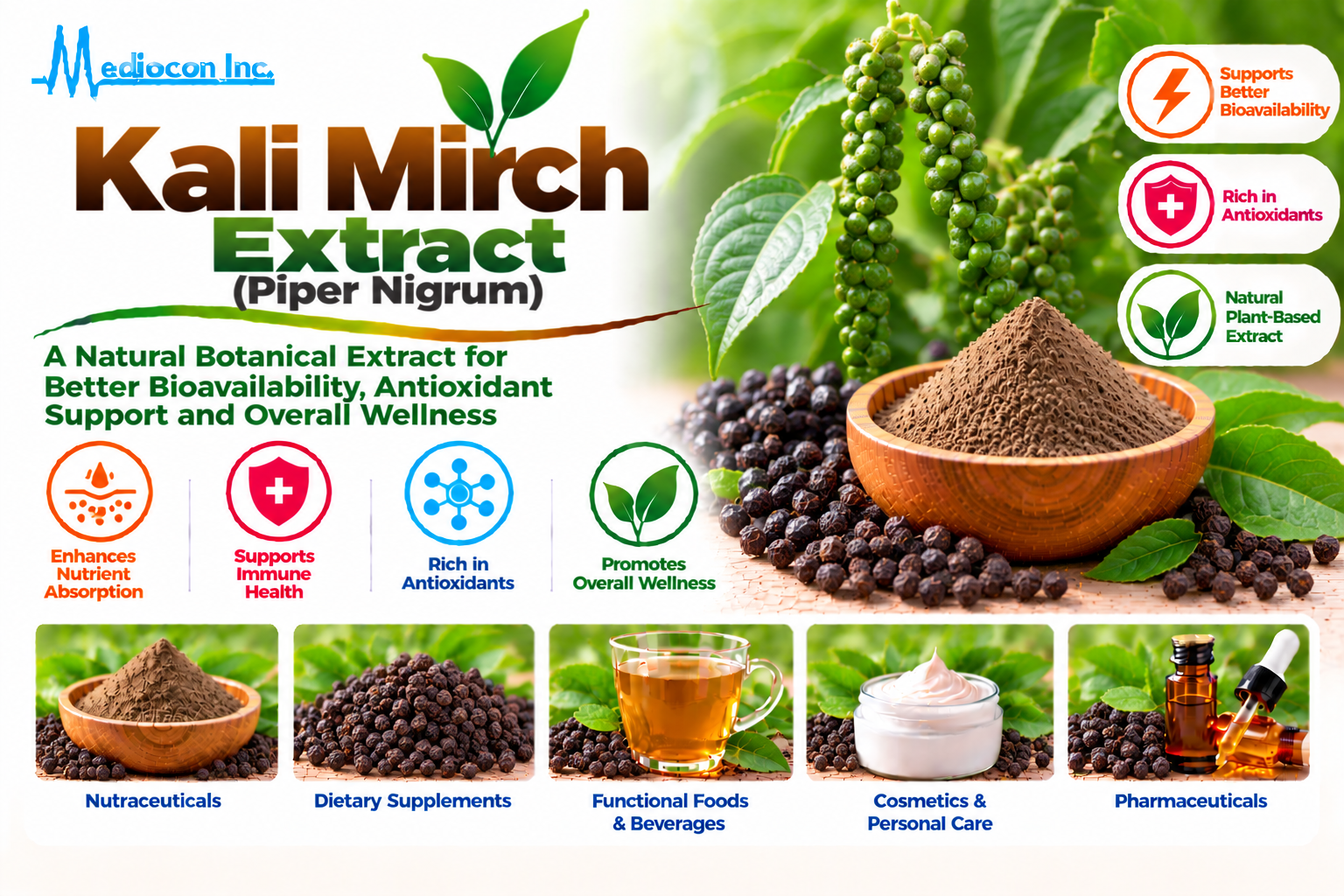
Kali Mirch Extract, commonly known as black pepper extract, is a botanical ingredient derived from the fruits of Piper nigrum, a flowering vine belonging to the Piperaceae family. Black pepper is one of the world's most widely used spices and has a long history of culinary and traditional use. In addition to its role as a seasoning, black pepper is valued as a source of naturally occurring plant compounds that are of interest in food science, nutraceutical development, and botanical formulations.
Kali Mirch Extract is produced by processing black pepper fruits to obtain an extract with characteristics suited to particular applications. Depending on the raw material, extraction method, and manufacturing process, the resulting ingredient may differ in appearance, composition, concentration, and functional properties. Some black pepper extracts are standardized for piperine, a naturally occurring alkaloid that contributes to the characteristic pungency of black pepper.
As interest in plant-derived ingredients continues to grow, Kali Mirch Extract is used in selected nutraceutical products, herbal formulations, dietary supplements, and food applications. The appropriate grade depends on the intended use, the required chemical profile, applicable quality standards, and regulatory requirements.
Piper nigrum is a perennial climbing vine cultivated for its fruits, which are processed into black, white, and other forms of pepper. The plant grows in tropical climates and is commercially cultivated in several regions, including India and other parts of South and Southeast Asia.
The fruits are commonly referred to as peppercorns. Their colour and characteristics depend on factors such as maturity at harvest and subsequent processing. Black pepper is generally produced by harvesting mature green fruits and drying them, while white pepper is typically prepared from ripe fruits after removing the outer fruit layer.
Black pepper contains several naturally occurring constituents, including piperine, volatile aromatic compounds, and other plant-derived substances. The precise composition varies with the cultivar, growing conditions, processing method, storage, and quality of the raw material.
For commercial applications, botanical identification is an important first step in ensuring that a product is derived from the intended plant species. Technical documentation should identify the botanical source and, where relevant, the plant part and extraction process.
Kali Mirch Extract is a concentrated botanical preparation obtained from black pepper fruits. Unlike ordinary ground black pepper, which contains the broader composition of the dried spice, an extract is produced through a defined processing method intended to recover selected constituents.
The characteristics of an extract depend on several manufacturing factors, including the quality of the starting material, the extraction solvent, processing conditions, concentration steps, and any subsequent standardization. Different commercial grades may therefore have different specifications and intended applications.
Some extracts are standardized to a specified piperine content. Others may be characterized by a broader chemical profile or supplied according to application-specific requirements. Standardization information should be verified from the manufacturer's specification sheet and batch-specific Certificate of Analysis (COA).
Kali Mirch Extract should not be assumed to have a particular concentration, extraction ratio, or purity simply because it carries the name black pepper extract. These properties must be established for the individual product.
Piperine is a naturally occurring alkaloid found in black pepper and is one of the best-known chemical constituents associated with its pungent character. It has been studied for its chemical properties and its potential relevance to the absorption and metabolism of certain compounds.
The piperine concentration in a commercial extract depends on the raw material and the manufacturing and standardization process. Where piperine content is a critical requirement, it should be assessed using an appropriate validated analytical method, such as a suitable chromatographic technique.
Piperine may influence the absorption or metabolism of certain medicines and other substances. Consequently, concentrated black pepper extracts, particularly those standardized for piperine, require appropriate consideration when used in dietary supplements and other products intended for human consumption.
Product developers should evaluate the ingredient's intended use, concentration, compatibility with other ingredients, and applicable safety requirements before incorporating it into a formulation.
Kali Mirch Extract has several characteristics that make it relevant to botanical ingredient sourcing and formulation development.
The extract is derived from Piper nigrum fruits. Confirming the botanical identity helps establish the ingredient's authenticity and suitability for its intended application.
Piperine is an important constituent in many black pepper extracts. Its concentration can vary substantially between products, so a standardized grade should be selected only when supported by analytical documentation.
The extraction method influences the chemical profile, residual solvent requirements, appearance, and other characteristics of the final product. Buyers should review relevant manufacturing and quality documentation.
Commercial extracts may be supplied as powders or other forms depending on the manufacturing process and product grade. Colour, odour, bulk properties, and physical appearance should be confirmed from the approved specification.
Quality assessment may include botanical identity, assay, moisture content, microbial testing, heavy metals, pesticide residues, and residual solvents, as applicable to the product and intended use.
A grade intended for a food application may not automatically be suitable for every nutraceutical, pharmaceutical, or cosmetic application. The intended use and relevant regulatory requirements should be reviewed before purchase or formulation.
Kali Mirch Extract may be considered for a range of applications depending on its composition, grade, regulatory status, and intended function.
Black pepper extract is used in some nutraceutical formulations, including products that combine botanical ingredients with vitamins, minerals, or other plant-derived compounds. Piperine-standardized grades may be selected where the formulation requires a defined piperine content.
Formulators should assess the total ingredient composition, intended serving level, compatibility, and potential interactions with other substances. Concentrated extracts should not be treated as interchangeable with ordinary culinary black pepper.
Selected black pepper extracts are incorporated into dietary supplements in capsule, tablet, powder, or other dosage forms. The appropriate ingredient specification depends on the formulation design and applicable regulatory requirements.
Product developers should establish suitable quality controls and verify the ingredient's safety and suitability for the intended population. Claims about health outcomes must be supported by relevant evidence and comply with applicable regulations.
Kali Mirch Extract may be included in multi-ingredient botanical blends. In these formulations, compatibility, concentration, sensory characteristics, and stability should be assessed during product development.
The extract's contribution to the finished formulation depends on its actual chemical composition and the levels used. General descriptions of black pepper should not replace product-specific evidence.
Black pepper is widely used as a culinary spice. Certain extracts may also be considered for suitable food applications where their specifications and regulatory status permit use.
Food formulators should evaluate flavour intensity, pungency, dispersion, processing stability, and any applicable limits or labelling requirements. Only grades suitable for the intended food application should be used.
Kali Mirch Extract may be of interest to researchers investigating botanical ingredients, piperine, plant-derived compounds, extraction techniques, or ingredient stability. Research use requires clear identification of the material, its purity, analytical profile, and relevant handling information.
Selecting a suitable black pepper extract requires more than comparing product names or advertised concentrations. Buyers and formulation teams should review the following factors.
Confirm that the ingredient is derived from Piper nigrum. Review the botanical name, plant part, source information, and available authentication records.
Determine whether the application requires a specified piperine concentration or another chemical marker. Request analytical evidence for any stated assay value.
An extract ratio may provide information about the relationship between starting plant material and the extract, but ratios alone do not establish potency or chemical equivalence. Interpret extraction information alongside the actual assay and product specifications.
Depending on the intended application, relevant testing may include heavy metals, pesticide residues, microbial contamination, and residual solvents. Requirements should be established according to applicable regulations and the product's risk assessment.
Request a current product specification, batch-specific COA, safety data sheet where applicable, and relevant regulatory or quality documentation. Batch traceability supports quality evaluation and supplier qualification.
Confirm that the selected grade is suitable for its intended use. Requirements for food, dietary supplements, cosmetics, research, and pharmaceutical applications may differ.
Quality control is essential for maintaining consistency in botanical ingredients. Because natural raw materials can vary, each commercial grade should have defined acceptance criteria and appropriate testing procedures.
Depending on the product, quality evaluation may cover:
Not every test applies to every product. The testing programme should reflect the extraction method, intended use, regulatory requirements, and approved specification. Reported results should be traceable to the relevant batch and analytical method.
Correct storage helps preserve the quality of botanical extracts. The recommended storage conditions for Kali Mirch Extract depend on its physical form, packaging, chemical composition, and stability profile.
As general precautions, keep the ingredient in its original, properly sealed container and protect it from excessive heat, moisture, and direct light where indicated by the product documentation. Avoid contamination during sampling and handling, and follow the manufacturer's instructions for resealing and storage after opening.
For manufacturing applications, assess the extract's compatibility with other ingredients and its stability under the expected processing and storage conditions. Shelf life should be assigned according to appropriate stability data rather than assumed from the botanical source alone.
The safety of Kali Mirch Extract depends on its composition, concentration, intended use, and exposure level. Concentrated extracts can differ significantly from the amounts of black pepper ordinarily consumed as a spice.
Piperine may affect the absorption or metabolism of certain medicines. Individuals taking medication, and product developers preparing supplements containing concentrated piperine, should consider potential interactions and obtain appropriate professional guidance where necessary.
Manufacturers and formulators should review the relevant regulations for the intended market, ingredient grade, product category, labelling, and permitted claims. No general statement about black pepper should be interpreted as proof that every extract is suitable for every application.
The botanical name of Kali Mirch, commonly known as black pepper, is Piper nigrum.
Piperine is a naturally occurring alkaloid found in black pepper. It contributes to the spice's pungent characteristics and is used as a marker in some standardized black pepper extracts.
No. Commercial extracts can differ in composition and standardization. Confirm the piperine assay from the product specification and batch-specific COA.
Depending on its grade and regulatory status, it may be used in selected nutraceutical, dietary supplement, herbal, food, and research applications.
Buyers should request a product specification sheet and batch-specific COA, along with relevant safety, regulatory, traceability, and analytical documents for the intended application.
Follow the manufacturer's storage instructions. In general, keep the product sealed and protect it from conditions that could compromise its quality.
Kali Mirch Extract (Piper nigrum) is a botanical ingredient derived from black pepper fruits and used in selected nutraceutical, herbal, dietary supplement, food, and research applications. Its composition and properties depend on the raw material, extraction process, and any standardization applied during manufacturing.
Piperine is an important constituent in many black pepper extracts, but its concentration should always be verified for the specific commercial grade. Botanical authentication, appropriate analytical testing, traceable documentation, and application-specific regulatory review are essential when selecting and using the ingredient.
For buyers, manufacturers, researchers, and formulation specialists, reviewing the product specification and batch-specific COA provides a reliable basis for evaluating whether a particular Kali Mirch Extract meets the requirements of its intended application.
Mediocon Inc is a GMP-certified API manufacturer and bulk pharmaceutical ingredient supplier based in Aurangabad, Maharashtra, India. We specialise in supplying Kali Mirch Extract (Piper nigrum) Manufacturer in India | Mediocon Inc. and over 1,000 other Active Pharmaceutical Ingredients, excipients, herbal extracts, and nutraceutical ingredients to pharmaceutical manufacturers worldwide.
Our Kali Mirch Extract (Piper nigrum) Manufacturer in India | Mediocon Inc. is manufactured under strict quality management protocols compliant with WHO-GMP, ISO 9001:2015, and major pharmacopoeial standards (IP, BP, USP, EP). Every batch undergoes full analytical testing before release with a Certificate of Analysis.
Export Markets
Quality & Compliance