
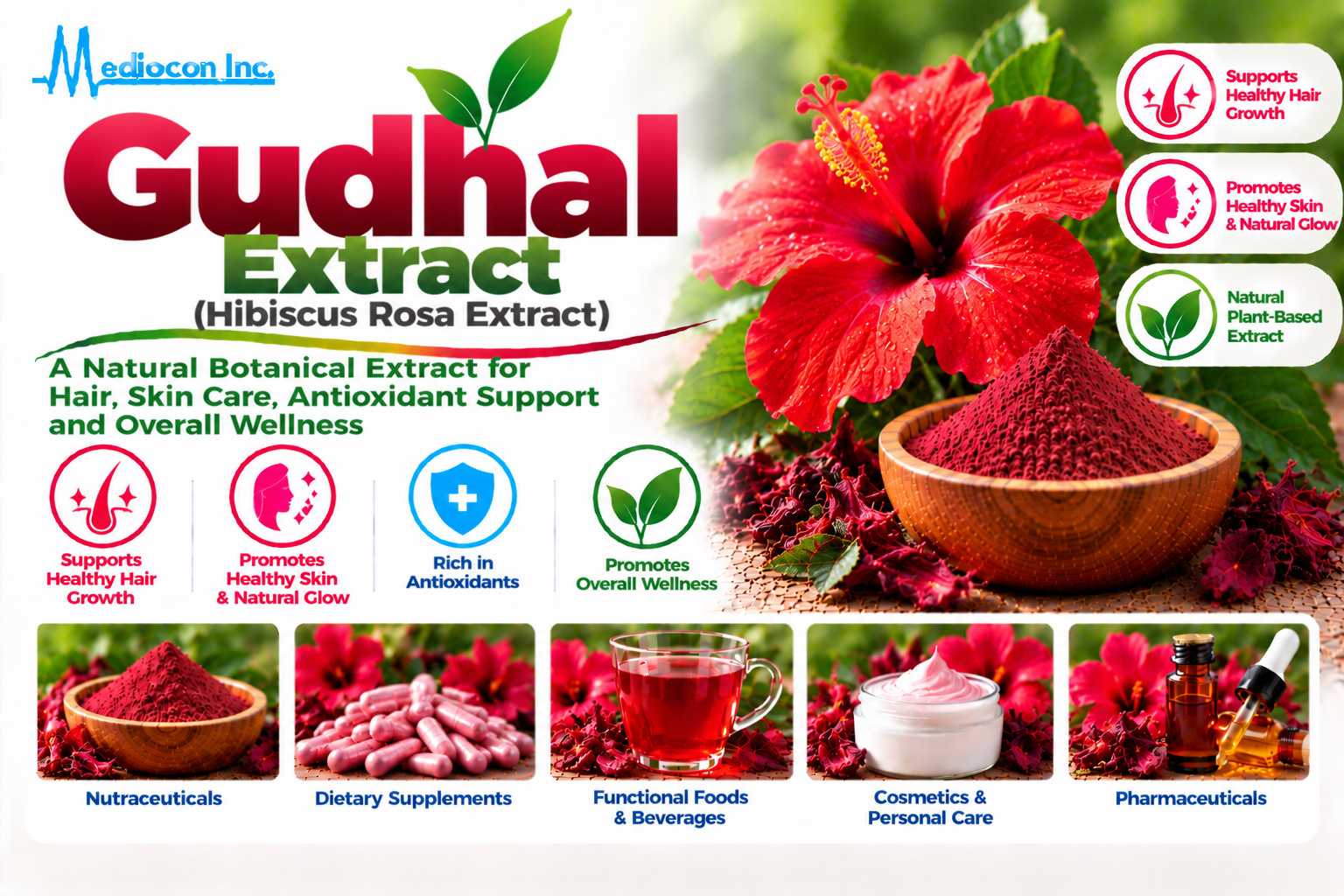
Gudhal, commonly known as hibiscus, is a flowering plant recognized for its colorful blooms and traditional uses. Hibiscus extracts are used in various botanical, cosmetic, personal care, and herbal product applications. The composition and characteristics of an extract depend on the hibiscus species, plant part, and extraction process.
Two species are particularly important when discussing hibiscus ingredients: Hibiscus × rosa-sinensis, often grown as an ornamental flowering plant, and Hibiscus sabdariffa, commonly known as roselle. These species have different characteristics and should not be treated as interchangeable when selecting or describing a commercial extract.
Gudhal Extract is a botanical ingredient obtained from selected parts of a hibiscus plant. Depending on the product, the raw material may include flowers, leaves, calyces, or other specified plant parts. The raw material is processed using an appropriate extraction method to obtain an extract with characteristics suited to its intended application.
Commercial hibiscus extracts may be supplied as powders or liquids. Their color, aroma, solubility, and chemical composition vary according to the species, plant part, extraction solvent, and processing conditions.
For manufacturers and formulators, identifying the correct botanical species is essential. The product specification should clearly state the scientific name, plant part, extract ratio, and any standardization requirements.
Hibiscus belongs to the Malvaceae family, which includes a variety of flowering plants.
Hibiscus × rosa-sinensis is commonly cultivated as an ornamental plant and is often associated with the name Gudhal in India. Its flowers are used in various traditional and personal care preparations.
Hibiscus sabdariffa, on the other hand, is known as roselle. Its fleshy red calyces are used in food and beverage products, including herbal infusions and other preparations.
Although both plants belong to the same genus, their plant parts, constituent profiles, and commercial applications may differ. Buyers should confirm the botanical identity on the supplier's specification or Certificate of Analysis before purchasing or formulating with a hibiscus extract.
The compounds present in hibiscus depend on the species and plant part used.
Anthocyanins are natural pigments associated with red, purple, and other dark colors in many plant materials. They are particularly relevant to certain red-colored hibiscus materials, including roselle calyces. Their concentration depends on the raw material and extraction process.
Flavonoids are a broad group of naturally occurring plant compounds. Their presence and concentration can vary considerably between hibiscus species and extracts.
Some hibiscus materials, especially roselle calyces, contain naturally occurring organic acids that contribute to their characteristic tart flavor. The composition depends on the plant material and processing method.
Hibiscus materials may contain additional naturally occurring compounds, depending on the species and plant part. A commercial extract should be evaluated using suitable analytical methods rather than assuming that all hibiscus products contain the same constituents.
The potential uses of Gudhal Extract depend on its botanical identity, quality, composition, and regulatory status.
Selected hibiscus extracts may be considered for cosmetic formulations such as creams, lotions, shampoos, conditioners, and hair care products. Formulators must evaluate the extract's compatibility, color, odor, solubility, stability, and microbiological quality.
Hibiscus is traditionally associated with hair care preparations. Depending on the extract and formulation, it may be explored as a botanical ingredient in shampoos, conditioners, hair masks, and other personal care products.
Traditional use should not be interpreted as proof that every commercial extract produces a specific hair growth or hair loss benefit. Product claims require appropriate evidence and must comply with applicable regulations.
Certain hibiscus materials, especially Hibiscus sabdariffa calyces, are used in foods and beverages. However, a commercial extract is suitable for food use only when its grade, processing, composition, and regulatory status permit that application.
A cosmetic-grade or otherwise unsuitable extract should not automatically be considered appropriate for consumption.
Hibiscus ingredients may be included in selected traditional or botanical preparations. The appropriate species, plant part, quality requirements, and intended use should be established before formulation.
Hibiscus extracts can also be evaluated by product developers seeking plant-derived ingredients for new formulations. The choice of extract should be based on documented characteristics rather than the common name alone.
The quality of Gudhal Extract depends on several important factors.
Botanical authentication: The scientific name should be verified to distinguish Hibiscus × rosa-sinensis from Hibiscus sabdariffa and other related species.
Plant part: Flowers, leaves, and calyces have different compositions. The plant part should be clearly identified in product documentation.
Extraction method: The extraction solvent and processing conditions influence the compounds recovered and the properties of the finished extract.
Standardization: If the product is standardized to a marker compound or group of compounds, the specification should identify the marker and verified target level.
Microbiological quality: Appropriate microbiological testing helps determine whether the extract meets the requirements of its intended application.
Contaminant testing: Relevant testing for heavy metals, pesticide residues, residual solvents, or other contaminants should be performed as applicable to the raw material, manufacturing process, and market requirements.
Batch consistency: A reliable quality system should include appropriate specifications and batch-specific documentation.
When evaluating a hibiscus extract for commercial use, buyers and formulators should review the following information:
These details help ensure that the ingredient matches the formulation's technical requirements.
Hibiscus extracts should be stored according to the manufacturer's instructions. Depending on the product, suitable storage may involve keeping the material in a tightly closed container, protected from excessive heat, moisture, and direct sunlight.
The recommended storage conditions, shelf life, and handling precautions should always be taken from the product-specific documentation. Different extract forms and formulations may require different storage arrangements.
A common botanical name alone is not sufficient to establish the identity or quality of a commercial extract. Two products described as “Gudhal Extract” may differ in species, plant part, extraction ratio, chemical composition, and intended use.
A complete technical specification and batch-specific Certificate of Analysis help buyers assess whether an ingredient meets their requirements. Manufacturers and formulators should verify all product claims before using an extract in a finished product.
Gudhal Extract is a botanical ingredient with potential applications in cosmetic, personal care, food, beverage, and herbal product development, depending on the species, grade, and applicable regulations. Its characteristics are influenced by botanical identity, plant part, extraction method, and quality controls.
For businesses considering hibiscus extracts, the most important first step is to confirm whether the material is derived from Hibiscus × rosa-sinensis, Hibiscus sabdariffa, or another species. Reviewing the product specification, analytical results, and intended-use requirements helps support better ingredient selection and more accurate product information.
What is Gudhal Extract?
Gudhal Extract is a botanical ingredient obtained from a hibiscus plant. Its properties depend on the species, plant part, and extraction process.
What is the botanical name of Gudhal?
Gudhal commonly refers to Hibiscus × rosa-sinensis in India, although the name Hibiscus Extract may also refer to other species. The exact product identity should be verified.
What compounds may be found in Hibiscus Extract?
Depending on the species and plant part, hibiscus materials may contain anthocyanins, flavonoids, organic acids, and other plant constituents.
Can Hibiscus Extract be used in hair care products?
Certain extracts may be considered for hair care formulations, subject to compatibility, safety, quality, and regulatory requirements.
Can every Hibiscus Extract be used in food products?
No. Food use depends on the exact species, extract grade, processing, and applicable regulations.
How can I verify the quality of Gudhal Extract?
Mediocon Inc is a GMP-certified API manufacturer and bulk pharmaceutical ingredient supplier based in Aurangabad, Maharashtra, India. We specialise in supplying Gudhal Extract (Hibiscus Rosa Extract) Manufacturer in India | Mediocon Inc. and over 1,000 other Active Pharmaceutical Ingredients, excipients, herbal extracts, and nutraceutical ingredients to pharmaceutical manufacturers worldwide.
Our Gudhal Extract (Hibiscus Rosa Extract) Manufacturer in India | Mediocon Inc. is manufactured under strict quality management protocols compliant with WHO-GMP, ISO 9001:2015, and major pharmacopoeial standards (IP, BP, USP, EP). Every batch undergoes full analytical testing before release with a Certificate of Analysis.
Export Markets
Quality & Compliance